What do you do to help animals?

I guess you are reading this cos you love animals. Just like me.

What do you do to help animals:

·         Do you take care of your pets at home?

·         Did you rescue an unwanted animal?

·         Do you work with animals to help society understand them better or save lives?

·         Do you donate money occasionally to help an animal charitable cause?

These are all great and noble activities that help animals. What else could you do to help animals?

I help animals

I asked myself this question. I have so many pets at home, many of them rescues. They are cared for and loved by my whole family. I work with pets to help their people understand them. I help them solved any behavioural issues they may have with their pets. This is my work and my passion and I am lucky to be able to indulge myself everyday.

This is not enough. I need to reach out and help more. I cannot donate unlimited dollars, I cannot save any more rescues. What I can do is lend some of my precious time and some of my knowledge to help others who need help.

Delta Therapy Dogs

I am Chairperson of Delta Society Australia. Delta is a national not-for-profit organisation that helps animals help people. We do this through educating people on motivational method of dog training, children on dog bite prevention and we coordinate people and their pets to visit nursing homes and hospitals, our Delta Therapy Dogs.

These therapy dogs and their owners are special. Everyday they brighten up the lives of people in aged care facilities, in hospitals, in prisons and in schools. They do it with a paw, a wag of a tail and perhaps the promise of a treat. They ask for nothing more. Their people accompany them, ensure they are well behaved and get so much joy from the reaction of people greeting their dogs. They ask for nothing more.

Delta is run by so many dedicated people who love what we do and want to let the world know the good work that our dogs do. We also want to expand our therapy in hospitals. Our dogs have helped children learn to walk again. Our dogs have helped people reach out their hand after a stroke. To the families that care for their loved ones in hospital, our dogs perform miracles.


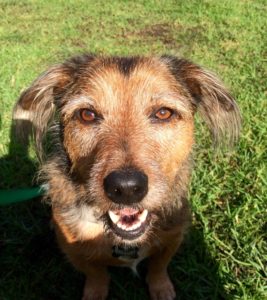
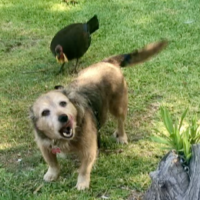
Delta therapy dog Chausette

Delta therapy dog Chausette

Delta need help

To train our dogs and to coordinate visits between patients, therapists and our dogs, we need help. We need cash, of course (doesn’t every non-profit group?).We also need help in marketing, advertising and public relations. We need help in volunteer management and in fundraising and sponsorship.

In return for help we can offer exposure to organisations and companies to promote their brand and be seen to be helping such a good cause. To individuals who choose to volunteer their help or their money, no matter how little, we can offer an experience you will never forget. You can accompany your chosen dog on one of his visits, you can learn how much he is appreciated by the people she meets.  You will be rewarded by knowing that you are helping people and pets in our community. We thank you.

You can read more about Delta Therapy Dogs here and about volunteering, donating or sponsoring.

You can find out more about Delta Society Australia here.

You can visit Dr Jo’s website here.


Post to Twitter Tweet This Post

  • Share/Bookmark

The ways that pets embarrass us

Sharing your life with any other living creature gives potential for embarrassment. None of us can completely control what any other living, breathing individual will do. And our pets seem spectacularly good at playing the role of embarrassment-maker. Here are some of the cheeky pets that I’ve encountered…

1.       Charlie the cheeky parrot who talked a lot and his favourite saying was “Silly bugger!” Fine at home with the family but not so good when the local minister came calling.

2.       Milo the terrier aka Milo the Humper. Milo humped everything including cushions, beds, legs of friends. Milo’s owner was over 80 years old and was exceedingly embarrassed by what she perceived to be Milo’s sexual habits.

3.       Sheba the noisy kitty would escape out of her owner’s home almost every night and get into a cat fight, waking her neighbour’s children. Once or twice, yes, it happens. But almost every night?

4.       Toby the Chocolate Labrador whose copraphagy habit was creating a social suicide situation for his owner at the park. Toby would eat the faeces of any animal he could find, even those dogs he played with.

5.       Sally the crotch sniffer. Say no more. Sally was a Doberman, just the right height.

6.       Elvis the sleek black pussycat who peed in guests shoes and handbags. Gave new meaning to ‘Elvis the Pelvis’.

7.       Happy Harry the larrikin Labrador (yes Labrador’s feature regularly on this list!). Harry just loved people so much that he jumped on everyone; especially when he was in the park; especially when he was in full flight! Harry had knocked over a lady who had just undergone knee replacement surgery. Oops!.

8.       Sunny the Burmese who had a fetish for underwear. Great but it didn’t belong to his family. He would sneak around the neighbourhood, stealing clothing from the washing lines. Imagine confronting your neighbour’s bloomers? Moral dilemma – do you give them back?

I reserve the right to save the last two on this list for my pets. Yes, why should the so-called animal expert have perfectly behaved pets?

9.       Cherry the Dalmatian who simply loved food. Would never steal it when mum was there but turn my back and… One time during a cocktail party when I had just served the whole round of Brie and turned away to fetch the crackers, shouts of laughter burst out. There was Cherry disappearing out the door with the entire cheese in her mouth. (Moral dilemma – do you rescue and serve the cheese?)

10.    Leo the lion, sorry Maine Coon. Leo’s cable radar has led him to find (when hidden) and chew his way through 3 ipod cables and 6 phone charger cables. Also 2 sets of guests cables too. Not just one bite. He entirely shreds them!J

 Do you have an embarrassing pet story? Or are you too embarrassed to share it?

More about pets at  Dr Jo’s website.

Post to Twitter Tweet This Post

  • Share/Bookmark

Responsible Pet Ownership, tired old phrase or is it Alive, Surviving & Thriving?

You have probably heard the term “Responsible Pet Ownership”. I have. Often. That figures, in my line of work where I try to educate pet owners. In fact, I have used the phrase many times myself. The problem with it is:

(i)                   It is in danger of becoming a boring phrase – overused, not at all ‘sexy’

(ii)                 What does it actually mean?

Trying to define Responsible Pet Ownership (RPO) is more difficult than it sounds. Yes it’s about providing food for Fido and taking Sam/Max/Tiger to the vet when sick but it is more than that.

I think RPO is about making pet owners think. Taking them over and above what an animal needs to survive but providing what it needs to thrive. Here are my suggested 3 basic rules of RPO:

(i)                   Choose your pet carefully

(ii)                 Provide everything your pet needs to survive

(iii)                Try providing some things your pet might need to thrive

Think of it as Alive, Survive, Thrive!!!

The first seems self explanatory. It rules out impulse buying, buying pets as gifts for friends, buying a Kelpie when you live in a unit and watch TV 18 hours a day. And yet so may people even get this wrong. Instead choosing carefully means considering how much time, energy and money you have and choosing your dog, cat, bird, horse or snake accordingly.

The second is what we need to do by law. We need to provide adequate and appropriate food, water, shelter and vet care and to ensure our pets are kept within the confines of our homes or attached to us when out and about. Of course not all people manage to do even this most basic of survival task.

The third is what I would like more pet owners to try. Pets can survive with very little from us. They do not thrive, however. Bringing out the best in your pet is a joy and a priveledge that all pet owners should strive to do.

Here are some suggestions for helping your pet thrive:

·         Look at the breed of your pet. What was it bred to do. Find an outlet that matches this natural instinct. If your dog was bred to hunt, hide food in your garden. If he was bred to run, try an agility class.

·         Teach your pet something new every week for a month. Any age and any species of animal can learn. Humans are the limiting factor in animal learning.

·         Teach yourself something new every week for a month about your pet. It doesn’t matter how much you think you know already, you can learn more. Read books and websites, go to talks or watch TV shows (remembering that many are one person’s viewpoint).

·         Take your pet somewhere new. A dog might enjoy a new outing or a new park to visit. A cat or a smaller mammal may enjoy being taken to a part of your house or yard that they have never been. Set up a picnic for them.

·         Give your pet a new toy or belonging. You can buy all sorts of toys and you can also make them (toilet roll holders, cardboard boxes). Watch the pleasure of your animal investigating his new toy.

·         For those pet owners inclined to dress their pet or even those who have never considered it, put an item of clothing on your pet. Watch everyone come to talk to you just because your dog is wearing a bandana.

NOTE: When you start to do things that make your pets thrive, be aware that there are people who tell you that it is a waste of time, money, energy. That your time/money/energy could be better spent on other projects- helping starving children, earning an income, playing golf. Smile sweetly and ignore those people. In my experience pet owners who help their pets thrive do all sorts of other good things too. They are caring, sharing people.

You can hear Dr Jo discuss this topic on radio Listen here

Post to Twitter Tweet This Post

  • Share/Bookmark